Your cart is currently empty!
Proper Use of Polishing Pads: Avoiding Damage During Polishing
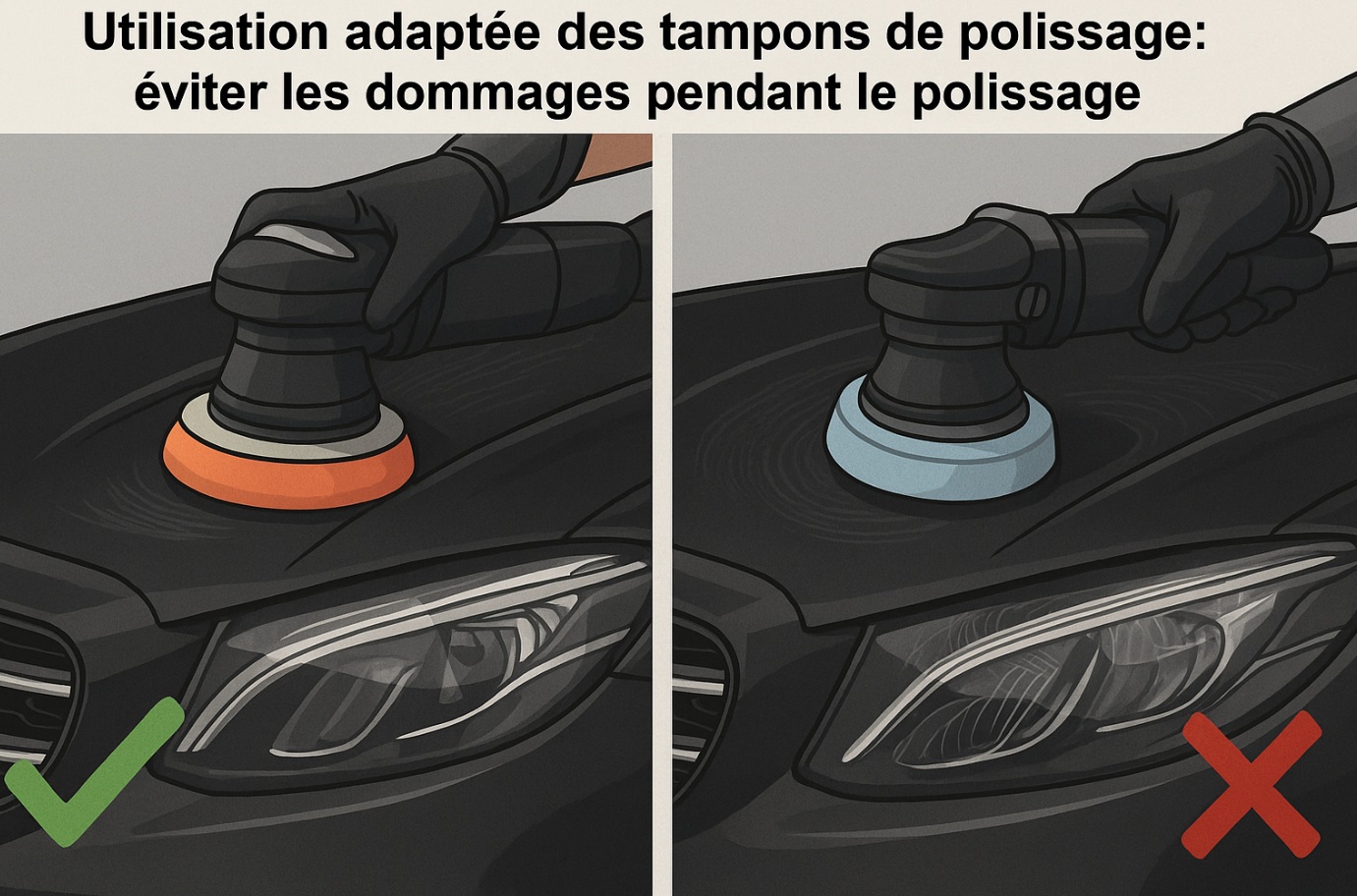
Proper Use of Polishing Pads: Avoiding Damage During Polishing
Polishing is a key step in car detailing to restore shine and brilliance to your vehicle, but improper use of polishing pads proper use can cause damage, such as scratches or burns on the paint. This guide explains how to use these pads correctly for a car polishing process without risks.
Why Use Polishing Pads Properly?
First of all, polishing pads help remove paint imperfections like micro-scratches or swirls. However, a poorly chosen or mishandled pad can damage the paint. For example, an overly aggressive pad might burn the surface, while a bad technique can create holograms. Using polishing pads properly ensures the right level of abrasiveness and safe handling to minimize these risks.
Choosing the Right Pad for Your Car Polishing
Next, selecting the right pad is essential for damage-free polishing. Pads vary in hardness and material, often indicated by their color. Here’s a table to understand their uses:
| Color | Hardness | Usage | Recommended Product |
|---|---|---|---|
| Yellow | Very Hard | Heavy cutting removes deep scratches, oxidation | Cutting compound |
| Orange | Medium to Hard | Moderate cutting light scratches, swirls | Cutting compound or intermediate polish |
| Green | Medium | Polishing removes micro-scratches, restores shine | Polish or all-in-one cleaner |
| White | Soft | Fine polishing removes holograms, enhances gloss | Fine polish, pre-wax cleaner |
| Blue | Very Soft | Finishing applies glazes, liquid waxes | Glaze, liquid wax |
| Black/Red | Ultra-Soft | Ultra-fine finishing waxes, sealants on sensitive surfaces | Wax, sealant |
For light polishing, opt for a soft pad available in our Polishing Pads category. For more noticeable imperfections, a medium pad may be necessary. Ensure the polishing pad proper use matches your polisher and chosen polish.
Preparing Your Car Before Polishing
Before starting, carefully prepare your car. First, wash the body to remove dirt and debris. Use a cleaner from our All-Purpose Cleaners category, such as the Koch Chemie Green Star Universal Cleaner. Then, decontaminate the paint with a clay bar to remove embedded residues. Finally, work in a clean, well-lit area.
Steps for Proper Polishing with Pads
To polish without risks, follow these steps:
- Apply the polish: Place a small amount of polish on the pad. Choose a product from our Polishing category.
- Polish in sections: Work on 50×50 cm areas. Use a low speed to spread the polish, then increase slightly to polish.
- Avoid overheating: Don’t stay too long in one spot to prevent burns. Keep the pad in constant motion.
- Clean regularly: Clean the pad after each section to avoid residue buildup.
Why Avoid Mistakes When Using Polishing Pads?
Improper use can lead to costly damage. For example, excessive pressure can scratch the paint, while a dirty pad can cause micro-scratches. Following these tips ensures safe polishing and a professional result.
Conclusion
In summary, the proper use of polishing pads is essential for a car polishing process without risks. By choosing the right pads based on their hardness and colors and following best practices, you’ll achieve a flawless shine. Explore our Polishing Pads category to find the pads and products suited to your car detailing needs!