Your cart is currently empty!
How to Use Polishing Pads with an Orbital Polisher
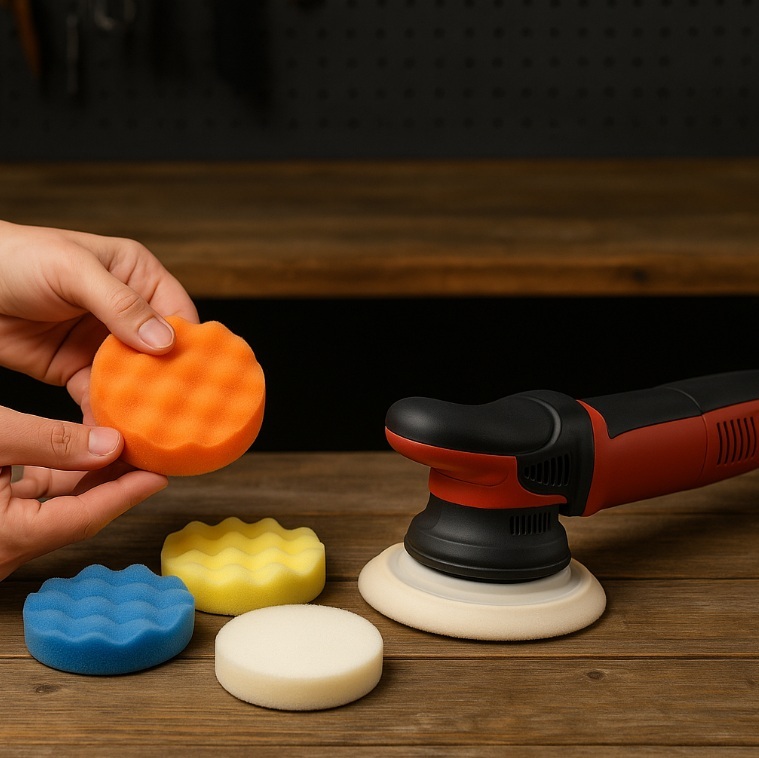
How to Use Polishing Pads with an Orbital Polisher
Polishing is a key step in car detailing to correct paint imperfections and achieve a glossy finish. Using polishing pads for car with an orbital polisher can transform your vehicle’s appearance while minimizing the risk of damage. An orbital polisher, with its random motion, is safer for beginners compared to rotary polishers. This article guides you step-by-step on selecting and using polishing pads with an orbital polisher, with product recommendations for professional results.
Step 1: Prepare Your Vehicle for Polishing
A clean, decontaminated surface is essential before using an orbital polisher. For a complete guide on pre-polishing cleaning, check out our blog How to Apply Wax for a Long-Lasting Protective Layer, which explains how to wash and prepare your car thoroughly. Then, decontaminate the paint with a clay bar to remove embedded contaminants, ensuring a smooth surface for polishing.
Step 2: Select the Right Polishing Pads and Compounds
Choosing the right pads and compounds depends on the imperfections you’re addressing. Ensure the pad size matches your orbital polisher’s backing plate (e.g., a 150mm pad for a 125mm plate). Here are our recommendations for a two-step polishing process.
- Polishing Pads (150mm):
- Ewocar Medium Pad Rot 150mm: A medium pad for correcting light to moderate scratches. Perfect for the initial step.
- Menzerna Soft Cut Foam Pad 150mm: A soft pad for a glossy finishing touch, ideal for the final step.
- Polishing Compounds:
- Menzerna Medium Cut Polish 2200 – 250ml: A medium-cut compound ideal for correcting medium scratches, to be used with a medium pad.
- Menzerna Super Finish 3500 – 250ml: A finishing compound for a mirror-like shine, paired with a soft pad. For an ultra-glossy alternative, try Koch Chemie Micro Cut M3.02 250ml.
For deeper scratches or heavily weathered paint, you can opt for a more abrasive compound like Koch Chemie Heavy Cut H9.02 250ml, but a finishing step will then be necessary.
Step 3: Use Your Polishing Pads for Car with an Orbital Polisher
Follow these steps for a safe and effective polishing process with an orbital polisher.
- Attach the pad. Secure your chosen pad to the orbital polisher, ensuring it’s properly centered.
- Apply the compound. Add 3-4 drops of polishing compound to the pad, avoiding excess.
- Polish in sections. Work on a 50×50 cm area at medium speed (3-4 out of 6). Apply light pressure and use overlapping crosshatch motions. To spot residual scratches or holograms, use an inspection light like the Scangrip SunMatch 4 Akku-LED-Handleuchte.
- Wipe off residue. Use a clean microfiber cloth to remove compound residue and check your results. For a clear comparison, take a before-and-after photo of a section of your hood.
- Safety Note: Wear gloves and protective glasses during polishing to avoid contact with abrasive compounds, which may cause irritation.
Step 4: Finish and Protect the Paint After Polishing
Once polishing is complete, protect your work for a lasting finish.
- Clean residue. Wipe off any remaining compound with a quick detailer from our Quick Detailers category.
- Apply protection. Use a sealant or wax to preserve the shine. For interior care tips, read our blog Why You Need a Plastic Cleaner for Car Detailing.
Why Use Polishing Pads for Car with an Orbital Polisher?
Polishing pads for car, when used with an orbital polisher, allow you to correct scratches, swirls, and paint imperfections while reducing the risk of holograms. They deliver a professional finish even for beginners. Additionally, the random orbital motion of the polisher minimizes paint burn, making the process safer.
Conclusion: Achieve a Perfect Finish with Your Orbital Polisher!
Using polishing pads for car with an orbital polisher is an effective way to enhance your vehicle’s appearance. Our recommendations, like the Ewocar Medium Pad and Menzerna Soft Cut Foam Pad, ensure flawless results. What’s your favorite tip for a perfect polish? Share your advice in the comments or on our social media! Visit DetailPeak to explore our selection and elevate your detailing game!